

Science at the core of
WakeZ
Wakez uses the therapeutic effect of “REM pressure” as an antidepressant treatment.
Introduction
At WakeZ, our foundation is deeply rooted in cutting-edge scientific research. Understanding the intricate relationship between REM sleep and depression is key to our innovative approach. We're not just developing a product; we're creating a solution backed by decades of scientific exploration and recent breakthroughs.
Let's explore the science that powers WakeZ.
The Critical Role of REM Sleep
REM Sleep and Depression
Studies have consistently shown that depression is linked with distinct changes in REM sleep, such as earlier onset, increased density, and prolonged duration [1,2]. These alterations are significant because critical neurotransmitters like serotonin and noradrenaline, pivotal in managing depression, cease their activity during REM sleep.
Impact of Antidepressants on REM Sleep
Antidepressants often exert a therapeutic effect by applying 'REM pressure' – altering the architecture of REM sleep. This adjustment is considered one of the primary mechanisms through which these medications exert their antidepressant effects.
Wake Therapy - A History
1970s
Since the 1970s, psychiatrists have experimented with REM sleep deprivation as a potential cure for depression. The concept, known as wake therapy or sleep deprivation therapy, has shown efficacy comparable to that of antidepressants in some studies.
Now
WakeZ's therapeutic approach is a modern reinterpretation of this wake therapy. Our technology replicates the beneficial aspects of altering REM sleep patterns, offering a non-pharmacological, side-effect-free alternative.
Our research
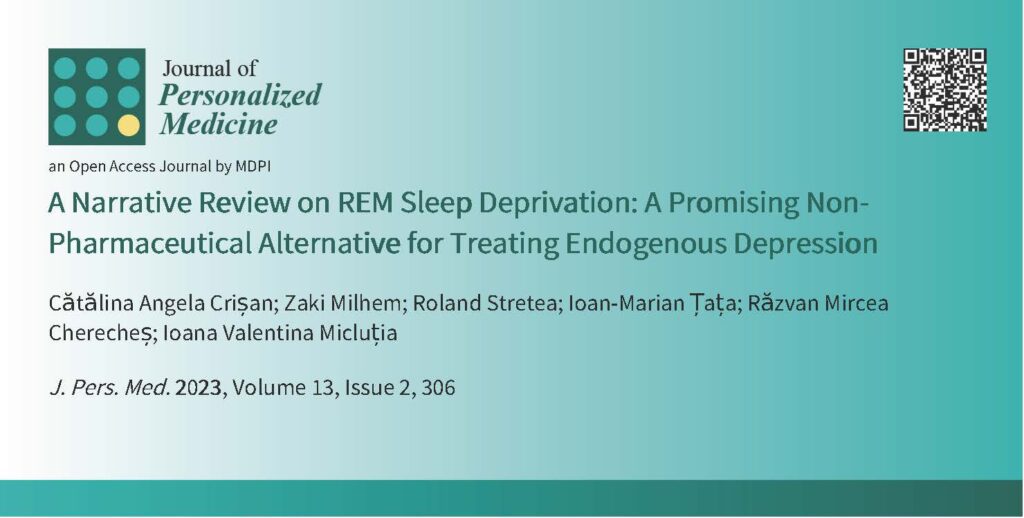
Crișan, C.A.; Milhem, Z.; Stretea, R.; Țața, I.-M.; Cherecheș, R.M.; Micluția, I.V. A Narrative Review on REM Sleep Deprivation: A Promising Non-Pharmaceutical Alternative for Treating Endogenous Depression. J. Pers. Med. 2023, 13, 306.

Pilot Trial and Insights
An experimental pilot trial, approved by an Institutional Review Board led by United States scientists, was conducted in November 2022, using an alpha version of the therapeutic module, calibrated to apply subliminal vibrations to otherwise healthy subjects. We enrolled 29 healthy volunteers, who slept for 10 consecutive nights each – a typical randomized blind trial, with the test group receiving 5 nights of intervention and 5 with no intervention. Our experimental pilot trial demonstrated that our technology significantly improves mood, focus, and energy levels. This pioneering study adds valuable data to the existing body of research, positioning WakeZ at the forefront of digital sleep interventions for mental health.

The University of Oxford featured an article in their official science magazine, titled “The troubled relationship between REM sleep and depression”, which underlines the critical importance of understanding this relationship in order to cure depression. This featured article was published in June 2023, 6 months after we completed our pilot trial. It is an increasing trend – and we are on top of it.
- Baglioni C, Nanovska S, Regen W, Spiegelhalder K, Feige B, Nissen C, Reynolds CF, Riemann D. Sleep and mental disorders: A meta-analysis of polysomnographic research. Psychol Bull. 2016 Sep;142(9):969-990. doi: 10.1037/bul0000053. Epub 2016 Jul 14. PMID: 27416139; PMCID: PMC5110386.
Riemann D, Berger M, Voderholzer U. Sleep and depression–results from psychobiological studies: an overview. Biol Psychol. 2001 Jul-Aug;57(1-3):67-103. doi: 10.1016/s0301-0511(01)00090-4. PMID: 11454435.